
Free written scope consultation - allowances, timeline, and change-order rules on paper before a single trade is scheduled
Abodu Driveway & Pavers: The Fort Lauderdale Owner’s Guide
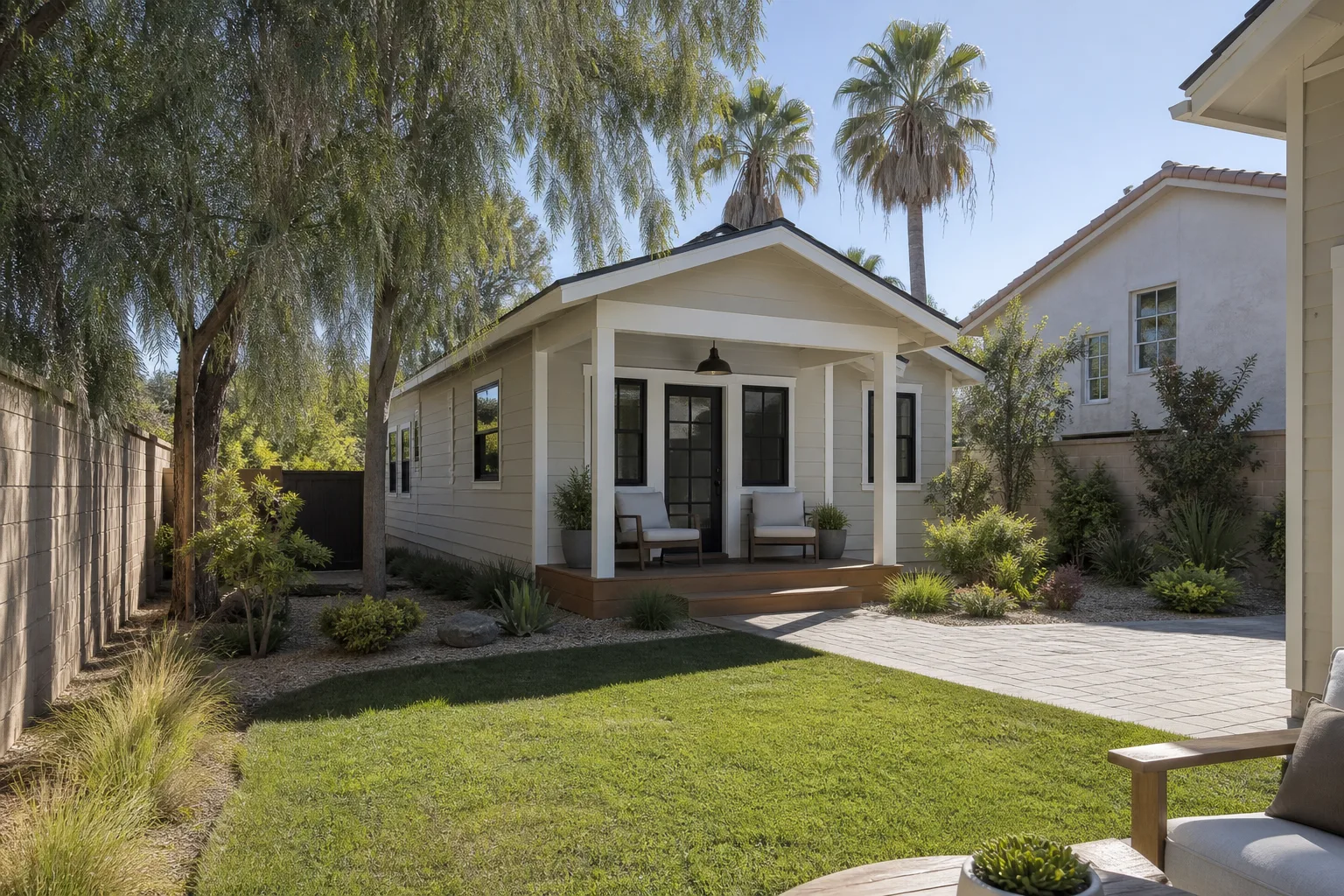
If you have an Abodu accessory dwelling unit and the driveway or paver approach to it is cracking, sinking, or pulling apart at the edges, here’s the direct answer: paver driveway installation in Fort Lauderdale runs $7,000 – $18,000, and driveway replacement generally lands between $5,000 and $14,000 depending on square footage, base condition, and paver type. We stock Abodu-compatible paver options and can usually have a new approach poured, laid, and walked on within five to seven working days. Most owners discover the problem the same way: after a heavy South Florida rain, one corner of the driveway has settled an inch lower than the rest, water ponds against the ADU’s slab, and the pavers at the low end start tilting like loose teeth.
That settling is rarely the pavers’ fault. In Fort Lauderdale, it’s almost always what’s underneath them: sand that washed out, a crushed-limestone base that was never compacted to begin with, or organic soil that’s been quietly decomposing under the load. The fix is rarely “replace one paver” – it’s pull the section, rebuild the base, and relay tight. Luca Romano has seen this exact pattern on Abodu pads across the area, especially in older neighborhoods near the Middle River where the water table sits high and the ground never fully dries.
Which Abodu Models This Applies To
Abodu’s ADU lineup – the Studio, One-Bed, and Two-Bed models – all ship with the same site-prep philosophy: a compacted gravel or limestone base, then either a concrete pad or paver approach depending on the lot and local code. The paver systems we service are almost always concrete interlocking pavers in the 2-3/8 inch to 3-1/8 inch thickness range, with the thicker pavers spec’d for driveways that see vehicle traffic and the thinner ones used for walkways and patios. If you’re not sure which you have, flip one loose paver over: the thickness is stamped on the bottom, and a driveway-rated paver will typically show “ASTM C936” or a vehicle-load rating. That’s the compatibility check that matters.
For the Abodu driveway specifically, the OEM approach is typically a standard 4″ x 8″ or 6″ x 9″ interlocking concrete paver in gray or tan, but that OEM designation matters less than the thickness and the base spec. A quality aftermarket paver from a manufacturer like Belgard, Tremron, or Pavestone will match the dimensions and outperform what often ships as a cost-saving line item – provided the base underneath is done right. We stock both OEM-spec and aftermarket pavers on the truck for most Abodu approaches, so matching a discontinued color or a specific texture usually isn’t the headache owners expect it to be.
Styles & brands we work with







Signs Your Abodu Driveway & Pavers Is Failing
- Edges spreading at the perimeter. The outer course of pavers is drifting away from the main field because the edge restraint – usually plastic or aluminum – was never staked deep enough or wasn’t installed at all. Once that edge lets go, every rain event pushes sand out from under the field and the whole surface starts to move.
- A low spot that holds water for 12+ hours after rain. This is the classic sign of a base failure underneath, not a surface issue. Water ponding against the paver means the sub-base has settled, which in Fort Lauderdale’s sandy, high-moisture soils happens faster than most owners expect – sometimes within 18 to 24 months of a rushed install.
- Pavers rocking or tipping underfoot or under a car tire. That wobble means the bedding sand has migrated or compacted unevenly. It’s not a paver problem, it’s a layering problem, and no amount of sweeping new sand into the joints will fix it for more than a week or two.
- Weeds and ant mounds erupting through the joints. Ants are a genuinely destructive force on paver driveways in South Florida. They excavate the bedding sand to build their colonies, and within months you’ve got voids under pavers that crack the moment vehicle weight hits them.
- Chipped or spalled paver faces, especially near the garage or ADU entrance. This usually shows up when a paver that wasn’t rated for vehicle load got installed in a driveway application. The surface starts flaking in sheets. The fix is replacing the affected pavers with the correct thickness, not sealing over the damage.
See the difference
 Before
 After
After Before
 After
After Before
 After
AfterReplacement Cost & What’s Included
For a typical Abodu driveway and paver approach in Fort Lauderdale, you’re looking at $7,000 – $18,000 for a full paver installation and $5,000 – $14,000 for a driveway replacement that pulls everything up and rebuilds from the base. Smaller repair jobs – pulling a settled section, recompacting, and relaying the same pavers – usually run under $2,000. The range is driven by three things: total square footage, what we find when we open up the base (if the original installer skipped geotextile fabric or used sand where limestone was spec’d, that’s extra material and labor), and whether you’re matching existing pavers or switching to a different thickness or color.
Every quote includes the pavers themselves, the compacted base rebuild, edge restraint, joint sand, and haul-away of the old material. You get a written price before any work starts – that’s the Relay Standard and it’s not optional on our jobs. The number on the invoice is the number you approved, with no change-order surprises. And the work is covered by the 365-Day Done Right Promise: if a paver shifts, sinks, or cracks because of something we did, we come back and make it right at no charge.
DIY or Call Us?
A driveway rebuild isn’t a Saturday project, and I’ll be straight with you: the dangerous part isn’t usually the pavers, it’s the base. If you try to relay pavers over a failed sub-base, you’ll be back out there in six months with the same sinkhole and a torn pad of sod to match. But there are a few things an owner can safely do. You can pop out a single cracked paver and replace it – set it in fresh bedding sand, tap it level with a rubber mallet, and sweep sand into the joints. You can also re-sand the surface as a stopgap, though in Fort Lauderdale’s rainy season that’s a temporary fix at best.
What you shouldn’t do is attempt to recompact a section of driveway without the right equipment. A hand tamper won’t give you the compaction density the pavers need, and an under-compacted base is exactly how we end up getting called about the same failure a year later. If the base has moved, the pavers have moved, and there’s no way around pulling the section. That’s a two-person job with a plate compactor, fresh limestone, and a string line for grading. Call (754) 354-7423 and we’ll come out and tell you honestly whether it’s a repair or a rebuild – and what it’ll cost before you commit to anything.
FAQs
A properly installed paver driveway in Fort Lauderdale should last 25 to 30 years with no major failures, though the joint sand will need topping up every couple of years. The pavers themselves rarely fail – it’s the base that determines lifespan. Call (754) 354-7423 for a free evaluation if you’re seeing settlement.
In about 70% of cases, a settled section can be lifted, the base recompacted, and the original pavers relayed – you keep your pavers and pay for labor and materials only. If more than a third of the surface is failing or the pavers are chipped and mismatched, replacement starts making more financial sense. Call (754) 354-7423 and we’ll tell you which camp you’re in after a site check.
A full Abodu driveway and paver replacement in Fort Lauderdale typically takes five to seven working days from tear-out to final sweep. Smaller section repairs are usually one to two days. We’ll put the timeline in writing before work starts so you’re never guessing when it’ll be done.
We stock the most common Abodu paver sizes and colors on the truck, and we can source any specific style through our material partners – including options from Belgard and Tremron – usually within a few days. You won’t have to chase down a paver match yourself. For an exact quote with material match, call (754) 354-7423.
Written by Luca Romano, Owner & Lead Contractor, Sawyer Remodel Fort Lauderdale at Sawyer Remodel Fort Lauderdale, serving Fort Lauderdale and nearby areas.


